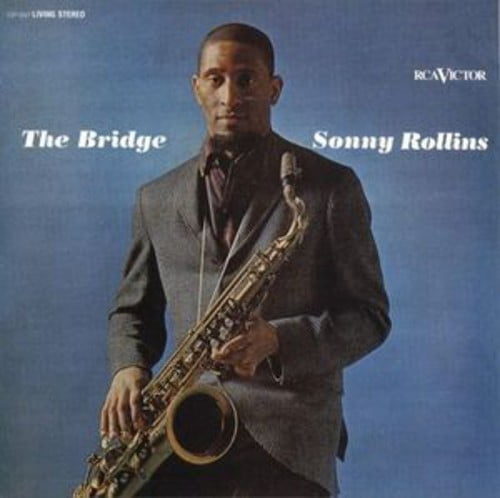
Sonny Rollins - Bridge - Music & Performance - Vinyl
Product details
| Management number | 255339051 | Release Date | 2026/11/21 | List Price | US$10.39 | Model Number | 255339051 | ||
|---|---|---|---|---|---|---|---|---|---|
| Category | |||||||||
Limited 180gm vinyl LP pressing including digital download. There is an extended gap in Sonny Rollins' discography between 1959 and 1962 in which he voluntarily decided not to play in public. No recordings exist from this period after the private tapes that were made during his March 1959 European tour. His subsequent recordings were the January-February 1962 sessions that would produce the album the Bridge. This marked the first of Rollins' legendary musical sabbaticals. Critical reception to the Bridge, which was not the revolutionary new jazz approach many expected, was mixed. Rollins, who had been considered groundbreaking in his thematic improvisations, was supplanted in critical buzz by the growing popularity of Ornette Coleman's free jazz. However, if not a tremendous departure from Rollins' earlier style, the album was nevertheless quite successful. He would record a second studio album during this period in April 1962. In July of the same year he would be professionally taped at the Village Gate in New York. The recordings, which were issued under the title of Our Man in Jazz, marked the first existing testimonies of Rollins' collaboration with Don Cherry, with whom he would often play in the early sixties. This album is presented here featuring on the cover David McLane's classic photo showing Sonny at the very Williamsburg Bridge.
Limited 180gm vinyl LP pressing including digital download. There is an extended gap in Sonny Rollins' discography between 1959 and 1962 in which he voluntarily decided not to play in public. No recordings exist from this period after the private tapes that were made during his March 1959 European tour. His subsequent recordings were the January-February 1962 sessions that would produce the album the Bridge. This marked the first of Rollins' legendary musical sabbaticals. Critical reception to the Bridge, which was not the revolutionary new jazz approach many expected, was mixed. Rollins, who had been considered groundbreaking in his thematic improvisations, was supplanted in critical buzz by the growing popularity of Ornette Coleman's free jazz. However, if not a tremendous departure from Rollins' earlier style, the album was nevertheless quite successful. He would record a second studio album during this period in April 1962. In July of the same year he would be professionally taped at the Village Gate in New York. The recordings, which were issued under the title of Our Man in Jazz, marked the first existing testimonies of Rollins' collaboration with Don Cherry, with whom he would often play in the early sixties. This album is presented here featuring on the cover David McLane's classic photo showing Sonny at the very Williamsburg Bridge.| Performer | Sonny Rollins |
|---|---|
| Music genre | Jazz |
| Music subgenre | POP JAZZ |
| Music release type | Album |
| Media format | LP |
| Original release date | 2014 |
| Language | English |
| Is collectible | Y |
| Has parental advisory label | N |
| Number of discs | 1 |
| Track listing | Without A Song 7:23, Where Are You 5:05, John S. 7:36, The Bridge 5:55, God Bless The Child 7:24, You Do Something To Me 6:45 |
| Record label | Jazz Wax |
| Songwriter | Sonny Rollins |
| Track name | Without a Song, Where Are You?, John S., God Bless the Child [Alternative Version], The Bridge, God Bless the Child, You Do Something to Me, The Bridge [Alternative Version], If I Ever Would Leave You, The Night Has a Thousand Eyes, Don't Stop the Carnival, Brown Skin Girl |
| Music media format | Vinyl Record |
| Is edited | N |
| Is enhanced | N |
Bestseller ranking
Contemporary Jazz Music
Correction of product information
If you notice any omissions or errors in the product information on this page, please use the correction request form below.
Correction Request Form